Youth-Led Climate Action Transforms Communities in Gbarpolu County

A Change Story of YUGNET Gbarpolu
Bopolu, Gbarpolu County — A youth-driven environmental initiative is making a visible impact in communities across Gbarpolu, as members of the Youth Go Green Network (YUGNET) Liberia credit the Strategic Partnership Agreement (SPA-II) Project, supported by ActionAid Liberia, for reshaping attitudes and practices around climate change and environmental protection.
According to the YUGNET Gbarpolu chapter coordinator, Henry David, awareness of climate change was virtually nonexistent in their community prior to the project’s introduction. Today, that reality has shifted significantly. Through targeted training sessions that reached approximately 30 young people, participants have become educators and advocates, spreading knowledge about the dangers of deforestation, improper waste disposal, and harmful environmental practices such as open burning.
“We didn’t understand how our daily actions affected the environment,” Henry David, explained. “Now we are teaching others and taking action to protect our community.”
One of the most notable achievements of the initiative is the establishment of eco-clubs in five schools across Bopolu. These clubs have played a key role in transforming school environments. Campuses that were once littered with waste are now visibly cleaner, with designated garbage cans and structured waste management systems in place.
Students have adopted waste-sorting practices, separating plastics and bottles from biodegradable materials an improvement credited directly to the awareness and leadership fostered by the eco-clubs. Teachers and administrators report a significant behavioral shift among students, who now take ownership of maintaining clean and healthy school surroundings.
Beyond sanitation, the project has also strengthened food security and sustainability efforts. YUGNET members established a one-acre cassava farm, serving as a self-help initiative to support the group’s long-term sustainability.
Any nation that cannot produce food for itself, that nation is not strong." Said Henry David, YUGNET Gbarpolu County coordintor said with passion.
In addition, school gardens now produce vegetables used for both school feeding programs and household consumption, with documented yields and positive feedback from students and teachers.
The initiative has also empowered young people especially girls to take on leadership roles. They are actively involved in planning, managing gardens, and leading advocacy efforts within their schools and communities. Monitoring reports and participation records show increased confidence and engagement among these young leaders.
Community involvement has been another cornerstone of the project’s success. Parents, teachers, school administrators, and local leaders have all contributed to maintaining and protecting the gardens and environmental gains. Meeting records and in-kind contributions highlight a shared commitment to sustaining these efforts.
A member of the Youth Go Green Network (YUGNET), Hawa Gbassey, also shared another transformative example of how the project’s impact is reaching beyond participants to transform entire households.
Following the training of 30 young people under the SPA-II Project Hawa and her peers returned to their communities to raise awareness about environmental protection, climate change, and sustainable agriculture. One of the direct beneficiaries of this knowledge was her own mother.
Today, my mother is a beneficiary. She no longer buys potato greens, pepper, or bitter ball. She grows them herself, sells some, and uses the rest for food.”
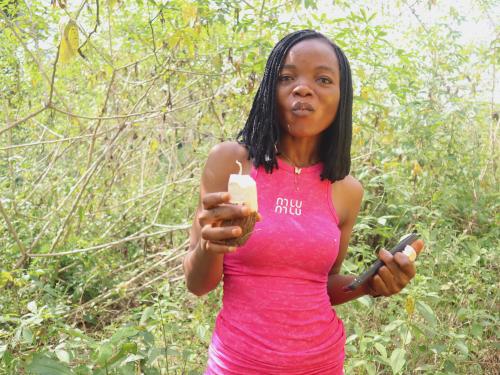
“After YUGNET trained 30 of us, we went back and started teaching others about a clean environment, agriculture, and climate change,” Hawa explained during an outcome harvesting visit in Gbarpolu. “Today, my mother is a beneficiary. She no longer buys potato greens, pepper, or bitter ball. She grows them herself, sells some, and uses the rest for food.”
The backyard garden now supplies fresh, healthy vegetables for daily meals while also reducing household expenses. At the same time, the surplus produce is sold, generating income and strengthening the family’s financial resilience.
Hawa’s story highlights a key outcome of the initiative: knowledge gained by young people is not only transforming their own behavior, but also driving practical, income-generating change within their families and communities.
Today, YUGNET members are recognized as environmental ambassadors in their communities, leading awareness campaigns and acting as watchdogs against activities that threaten the environment. Their work reflects a growing culture of accountability and collective responsibility for climate action in Gbarpolu County.
As the SPA-II Project continues, stakeholders say the transformation seen in Bopolu and surrounding areas is a clear example of how youth empowerment and community engagement can drive meaningful environmental change.