Human Rights Watch Report Exposes Deep Crisis in Liberia’s Education Sector, Lagging Behind Sierra, ActionAid Liberia Says Political Will is key to Reforms

MONROVIA, Liberia -A new report released Tuesday by Human Rights Watch has painted a troubling picture of Liberia’s struggling education system, warning that thousands of children are being denied access to schooling because of registration fees, overcrowded classrooms, and chronic underfunding by the government.
The report, titled ‘Without Education, There Will Be Nothing: School Fees and Other Barriers to Education in Liberia’, says Liberia is lagging far behind neighboring West African countries such as Sierra Leone and Zambia in prioritizing education spending and expanding access to schools.
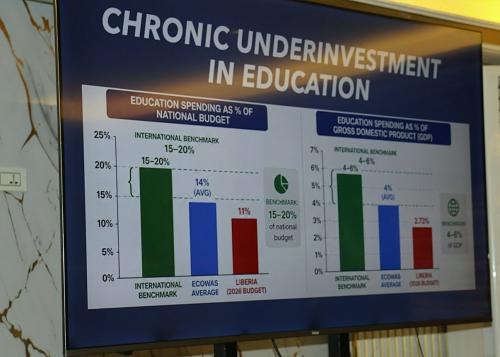
According to the report, Liberia currently allocates only 11 percent of its national budget to education, well below the international benchmark of 15 to 20 percent agreed upon by governments worldwide. The report noted that Liberia had pledged in 2021 to increase education spending to 20 percent by 2025, but failed to meet that target.
“Without education, there will be nothing,” the report warned, as it detailed the growing barriers facing children across Liberia.
Human Rights Watch said Liberia’s education spending also falls below regional standards, accounting for only 2.73 percent of the country’s Gross Domestic Product, compared to the ECOWAS average of 4 percent and the global benchmark of 4 to 6 percent.
The report only just confirms some of the key findings from ActionAid’s 2025 report on public sector cuts in Africa titled: "The Human Cost of Public Sector Cuts in Africa. Watch the full video of the findings from HRW.
“The second fundamental failure Jo said is the “chronic underinvestment in the educational sector.” The report found.
She further disclosed that by saying, “For years Liberia has not been developing the resources that are needed to make sure that children get the education that are needed that they are entitled to.”
Data collection and interviews for the report was done with 118 parents, teachers, and school administrators, as well as peer-to-peer interviews with 61 children and youth among others.
The report contrasted Liberia’s performance with neighboring Sierra Leone, another post-conflict country that endured the Ebola epidemic and faces similar economic challenges. According to Human Rights Watch, Sierra Leone’s adoption of a free education policy and the removal of school and examination fees dramatically increased school enrollment from less than two million children to nearly three million.
The organization also highlighted Zambia’s progress, noting that the country enrolled approximately 2.5 million children back into school in 2022 through expanded investment in education.
Despite Liberia’s law guaranteeing free and compulsory education from grades one through nine, the report found that families are still required to pay registration fees and other costs in public schools, creating significant obstacles for poor households.
Human Rights Watch said many parents reported delaying their children’s enrollment, withdrawing them from school, or struggling to maintain regular attendance because they could not afford the mandatory fees.
“At the early childhood level intended for children ages three to five, 43 percent of children are at least three years over-age for their classes,” the report stated.
The report further revealed that overcrowded classrooms remain a major challenge in Liberia’s public schools, with classes of 80 to 100 students described as common across the country.
The burden is especially severe in Liberia, where nearly half of the country’s estimated five million people live in poverty, according to the findings.
Responding to Human Rights Watch report, ActionAid Liberia’s Country Director and UNICEF Liberia described the report as nothing that fall short of the reality that Liberian students, school administrators, and poor parents are enduring placing bulk of the blames on the government for not doing enough.
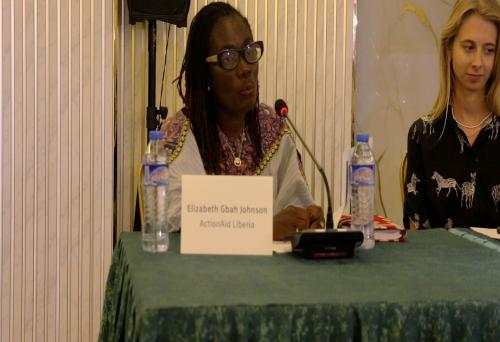
“We’ve read the report and again listening to what Jo Becker presented, we see this as a continuous failure when it comes to the promotion of human rights, especially the rights of children, from our government and it’s not happening in the past, but it’s happening now in plain day light, and this is unacceptable, meaning it has to be given immediate attention.” ActionAid Liberia’s Country Director, Elizabeth Johnson told the audience at the report launch Wednesday.
Liberia is not short of resources to fund and improve education for Liberian children, citing the lack of political well to do so, Johnson added.
“We have a law that says education from primary to 9th grade is compulsory, but the reality does not exist,” putting the Ministry of Education on the spotlight. “We would have expected the Ministry of education to be here, but strangely we don’t have a representative of the Ministry of Education here, that is a clear signal that the political well power is still not there.”
Wrapping up her remarks during the panel discussion the ActionAid Liberia’s country director further stressed how debts payment and the IMF austerity measures undermine the funding that should go towards funding the country’s education, something ActionAid Globally stand against
“If you see the government says they are doing construction and signing new contracts, some of those fundings come through loans and Liberia has to do debts payment. She reminded the audience saying. And added that “debts payment also comes affect the issues of access to education because some of the funding that should actually go towards ensuring that we have a comprehensive education package, those moneys to towards debts payment.” ActionAid Liberia’s Country Director told stakeholders, students and educators at the launch.
She further disclosed that by saying, “For years Liberia has not been developing the resources that are need to make sure that children get the education that are needed that they are entitled to.”
Data collection and interviews for the report was done with 118 parents, teachers, and school administrators, as well as peer-to-peer interviews with 61 children and youth among others.
The report contrasted Liberia’s performance with neighboring Sierra Leone, another post-conflict country that endured the Ebola epidemic and faces similar economic challenges. According to Human Rights Watch, Sierra Leone’s adoption of a free education policy and the removal of school and examination fees dramatically increased school enrollment from less than two million children to nearly three million.
The organization also highlighted Zambia’s progress, noting that the country enrolled approximately 2.5 million children back into school in 2022 through expanded investment in education.
Despite Liberia’s law guaranteeing free and compulsory education from grades one through nine, the report found that families are still required to pay registration fees and other costs in public schools, creating significant obstacles for poor households.
Human Rights Watch said many parents reported delaying their children’s enrollment, withdrawing them from school, or struggling to maintain regular attendance because they could not afford the mandatory fees.
“At the early childhood level intended for children ages three to five, 43 percent of children are at least three years over-age for their classes,” the report stated.
The report further revealed that overcrowded classrooms remain a major challenge in Liberia’s public schools, with classes of 80 to 100 students described as common across the country.
The burden is especially severe in Liberia, where nearly half of the country’s estimated five million people live in poverty, according to the findings.
Responding to Human Rights Watch report, ActionAid Liberia’s Country Director and UNICEF Liberia described the report as nothing that fall short of the reality that Liberian students, school administrators, and poor parents are enduring placing bulk of the blames on the government for not doing enough.
“We’ve read the report and again listening to what Jo Becker presented, we see this as a continuous failure when it comes to the promotion of human rights, especially the rights of children, from our government and it’s not happening in the past, but it’s happening now in plain day light, and this is unacceptable, meaning it has to be given immediate attention.” ActionAid Liberia’s Country Director, Elizabeth Johnson told the audience at the report launch Wednesday.
The UNICEF Representative then advanced a series of recommendations to say; Government needs to work together with partners and stakeholder to establish sustainable long term and critical schools financing mechanism to eliminate the costs and barriers that force Liberian parents to make wrong choices between education and their children.
Human Rights Watch is recommending that the Liberian government immediately abolish registration fees in public schools, increase investment in education, hire and train more teachers, and construct and rehabilitate school buildings and classrooms nationwide.
The report argues that unless urgent reforms are implemented, Liberia risks leaving behind another generation of children without quality education and economic opportunities. Key among the reforms is the call for the elimination of registration fees across all public schools in Liberia.
The full report can be found on Human Rights Watch.